


EPS foam helmet liner for sports safety head protection
EPS is lightweight, effective across a wide range of temperatures and conditions and highly effective at reducing the amount of energy transferred to your head during an impact. EPS accomplishes that energy reduction by collapsing during the impact, converting some of the energy into heat and slowing the transmission of energy. A key advantage of EPS is the reliability of the molded part to deal with impact energy over a wide range of conditions. Another advantage is that EPS is not damaged by some of the common chemicals that can affect other materials (although it can be damaged by some chemicals).
Once those expanded polystyrene beads collapse, however, they do not regain their shape (or ability to absorb energy); for that reason, EPS is strictly suited to single impacts. This is why helmets with EPS liners should be replaced after a crash. Similarly, helmet owners should be vigilant about not dropping or knocking their helmet during daily use. You’ll find EPS foam liners utilized in the vast majority of cycling, snow sports and motorcycle helmets. Athletes who frequently fall down or experience multiple impacts (snowboarders, football players, etc.) may prefer helmets equipped with more resilient liner materials.

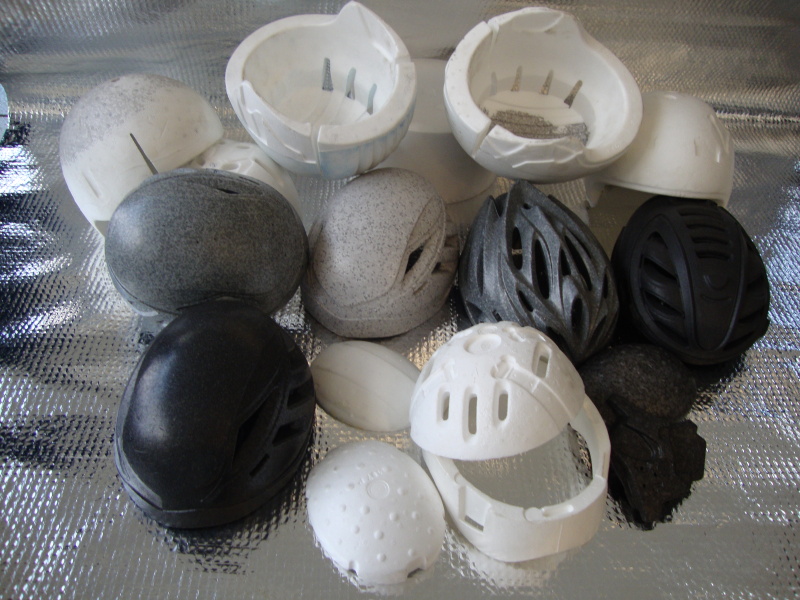
Manufacturers can precisely “tune” their EPS foams by adjusting foam density to provide just the right amount of impact attenuation needed for a given application. Harder EPS foams work well to reduce energy transfer during high-speed impacts. Softer EPS foams are better suited to slower-speed, lower-energy impacts.


